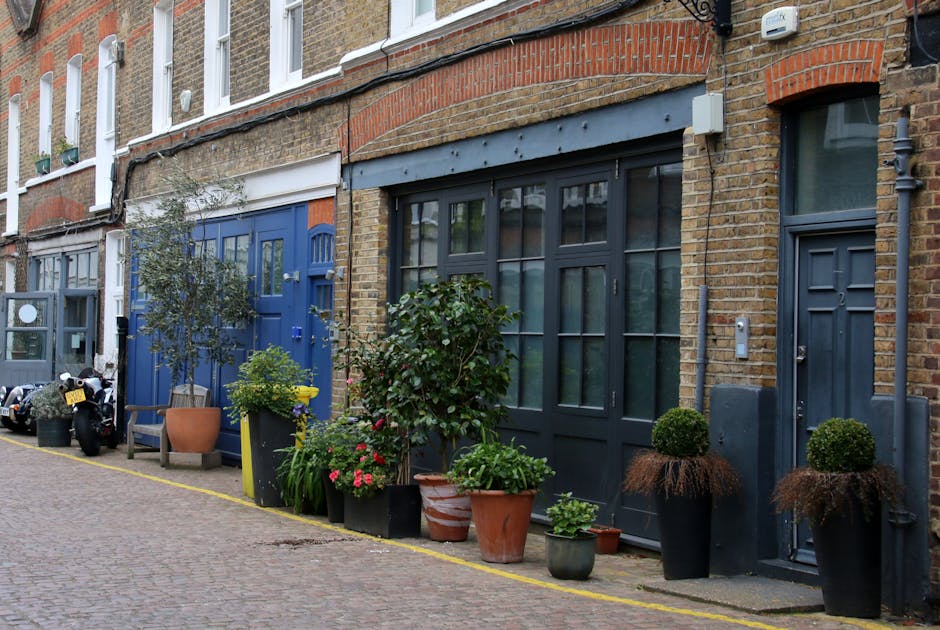
Mornington Crescent gardeners space saving planting ideas
If you are working with a narrow courtyard, a modest front garden, a balcony edge, or one of those awkward London plots that seems to shrink every time you look at it, you are not alone. Mornington Crescent gardeners space saving planting ideas are all about making compact outdoor areas feel fuller, more useful, and far more beautiful without cluttering them. The trick is not to cram in more plants for the sake of it. It is to choose the right planting layers, the right containers, and the right mix of structure and softness so the whole space works harder.
That matters a lot in this part of London, where space is precious and every square metre has to earn its keep. A well-planned small garden can feel calm rather than cramped, productive rather than messy. And yes, it can still have plenty of character. In this guide, you will find practical planting ideas, common pitfalls, step-by-step advice, and a few local-minded observations from the kind of gardens where a good plan makes all the difference.
Table of Contents
- Why space saving planting matters
- How space saving planting works
- Key benefits and practical advantages
- Who this is for and when it makes sense
- Step-by-step guidance
- Expert tips for better results
- Common mistakes to avoid
- Tools, resources and recommendations
- Law, compliance, standards, or best practice
- Options, methods, or comparison table
- Case study or real-world example
- Practical checklist
- Conclusion
- Frequently asked questions
Why Mornington Crescent gardeners space saving planting ideas Matters
Small outdoor spaces can disappear visually very quickly. A few oversized pots, a couple of tired shrubs, and suddenly the garden feels more like storage than a retreat. That is why Mornington Crescent gardeners space saving planting ideas matter: they help you use height, repetition, structure, and smart plant choice to create a garden that feels intentional rather than squeezed in.
In compact London gardens, the challenge is rarely a lack of potential. It is usually a lack of room for mistakes. A plant that looks elegant in a nursery can turn bulky in six months. A container that seems generous at purchase can become a walkway obstacle by autumn. To be fair, everyone gets caught by this at some point. The good news is that the fix is usually design thinking, not a bigger garden.
Space saving planting also matters because small gardens are often viewed from indoors as much as from outside. A window from the kitchen, a view from a first-floor room, or a tiny patio seen at dusk all reward crisp vertical lines, layered planting, and good seasonal structure. You notice the order first. Then the softness. Then the detail. That is the real magic.
For many homeowners and tenants, a compact planting scheme also needs to be easier to maintain. Less strain, less watering, fewer tangled corners. If that sounds appealing, it is because it is. Especially if your time is already stretched and you do not want the garden becoming a weekend punishment.
How Mornington Crescent gardeners space saving planting ideas Works
The principle is simple: instead of spreading plants horizontally, you build interest vertically and in layers. Think of the garden as a sequence of zones rather than one flat bed. The best small-space planting schemes combine structure, texture, and movement so the eye travels up, down, and across without feeling blocked.
There are a few core methods that work particularly well:
- Vertical planting using trellises, frames, wall-mounted planters, and climbing plants.
- Container layering with pots of different heights and shapes rather than a single row of uniform containers.
- Multi-season planting so one section is not bare for half the year.
- Focal-point planting to draw attention to one strong feature instead of many competing ones.
- Repetition of plant types to create calm and make the space look larger.
The biggest mistake people make is trying to fill every corner. In a tight garden, negative space is not wasted space. It is breathing room. A little emptiness makes the planted areas feel more deliberate and often more luxurious. Funny how that works, really.
Good space saving planting also takes microclimates into account. A sheltered wall near Mornington Crescent may stay warmer and drier than a shaded side return. A sunny patio can cook shallow pots by mid-afternoon in summer, while a narrow passage may remain damp and cool. The planting should respond to those conditions, not fight them.
Key Benefits and Practical Advantages
There is more to compact planting than making things look neat. When it is done properly, it changes how the entire space is used.
- More usable room because plants are arranged with purpose rather than spread randomly.
- Better visual scale so a small garden feels balanced, not cramped.
- Improved privacy from climbing plants, screening grasses, or tall narrow shrubs.
- Lower maintenance pressure if plant choices are matched to light and soil conditions.
- Stronger seasonal interest through layered planting and repeated flowering times.
- Greater flexibility because containers can be moved, edited, or replaced more easily than fixed borders.
There is also a psychological benefit that people sometimes underestimate. A small garden that feels organised tends to get used more. You step outside for a cup of tea, sit down for five minutes, water a few pots, and suddenly the space becomes part of daily life rather than a chore waiting to happen. That is often the difference between a garden people admire and a garden people actually enjoy.
For properties where outdoor space is visible from the street, a tidy, layered planting scheme can also improve first impressions. Not in a flashy way. More in the quiet, "this place is cared for" sense. Which, honestly, goes a long way.
Who This Is For and When It Makes Sense
Space saving planting is a strong fit for a wide range of households in and around Mornington Crescent. It makes particular sense if you have:
- a narrow back garden with limited border depth
- a courtyard that needs greenery without losing circulation space
- a balcony or terrace where containers must stay compact
- a rental property where permanent changes are limited
- a family garden that needs planting but also needs room to play
- a low-maintenance lifestyle and limited time for upkeep
It also suits people who want a more modern, clean-lined feel. You do not need a huge planting palette to make this work. In fact, too many different plant varieties can make small spaces look busier than they are. A restrained mix often looks more expensive, more settled, and more convincing.
On the other hand, if you want a wildlife-friendly garden with a wild, meadow-like feel, you can still use these principles. The difference is that your planting will be loosely structured rather than rigidly formal. The space saving idea still applies; it just gets expressed in a softer way.
Mornington Crescent gardeners often face a very practical question: should the garden be decorative, functional, or both? The answer is usually both. If a small outdoor space is purely decorative, it can feel underused. If it is purely functional, it can feel cluttered. The sweet spot is where structure and softness meet.
Step-by-Step Guidance
Here is a clear way to approach a compact planting scheme without overcomplicating it.
1. Measure the usable space properly
Do not rely on guesswork. Measure the garden, patio, or balcony, and note where the light falls during the day. Morning sun, afternoon shade, and full shade areas will all behave differently. You do not need to be scientific about it, but you do need to be honest about conditions.
2. Decide what the space must do
Ask yourself a simple question: what is this area really for? Seating, growing herbs, screening neighbours, entertaining, or all four? If you know the job, the planting choices become easier. A tiny courtyard that needs privacy from an overlooking window will need different plants from a sunny dining terrace.
3. Choose a structure first
Before you think about flowers, think about shape. Will you use a slim trellis, a raised planter, a wall frame, a tall pot, or a row of repeated containers? Structure is what holds the design together when blooms come and go. It is the skeleton, in plain English.
4. Build layers from tall to low
A simple formula works well: tall backdrop plants, mid-height fillers, then lower spillers or ground cover. This could mean an evergreen climber at the back, ornamental grasses in the middle, and trailing herbs or compact perennials at the front. The layered effect makes the area feel richer without occupying extra floor space.
5. Limit the number of plant types
Three to five repeating plant families often look better than a random mix of twelve. Repetition calms the eye. It also makes maintenance easier, because you are not learning the needs of a dozen different species at once.
6. Use vertical surfaces intelligently
Walls, fences, and even blank side returns can carry a surprising amount of planting if used sensibly. Climbing plants, mounted troughs, and narrow shelf planters can create depth without blocking movement. Just make sure access for watering is realistic. A beautiful planter that cannot be watered properly is basically decorative stress.
7. Check container weight and drainage
In smaller spaces, containers often sit on terraces, balconies, or surfaces that need protection. Lightweight materials can help, but drainage still matters more than appearance. Pots should never sit permanently waterlogged. Put that one in bold in your head if needed.
8. Edit the scheme over time
A space saving planting plan is not a one-and-done exercise. You will probably tweak it after a season or two. Maybe a plant gets too large. Maybe a colour combination feels too busy. That is normal. Gardens are not static, and small gardens especially benefit from light editing.
Expert Tips for Better Results
If you want compact planting to look polished rather than crowded, a few design habits make a real difference.
Use a restrained colour palette. A small garden often looks better with two or three main colours plus greenery. You can still have seasonal pops, but too many colours can shrink the space visually.
Repeat container shapes. Mixing too many pot styles can make a compact area feel muddled. One or two pot families usually read as more cohesive.
Choose narrow or columnar plants where height is needed. Upright forms provide screening without demanding a wide footprint. They are especially helpful near doors, seating areas, or tight passages.
Think about scent as well as looks. In a small garden, fragrance carries quickly. A pot of herbs, jasmine, lavender, or other scented plants can make the whole area feel richer in the evenings. Around 7pm on a warm day, that scent can be the thing you remember most.
Leave room for a chair or one clear path. It sounds obvious, but people do sometimes plant themselves out of their own garden. Literally. A good planting plan should make the space easier to use, not more difficult.
Use evergreen structure wisely. Evergreens hold the garden together in winter, but too much can feel heavy. Pair them with lighter textures or seasonal perennials so the whole thing breathes.
Make maintenance realistic. If you need to stand on tiptoe with a watering can every day, the design is probably not right. Small gardens should be easier to care for, not more awkward.
One small professional habit we often recommend: stand at the doorway, at the back of the room, and from the main window before finalising any layout. Those sightlines tell you quickly whether the garden reads as calm or cluttered. It is a simple test, but a good one.
Common Mistakes to Avoid
Compact gardens are forgiving in some ways and brutally honest in others. If something is off, you notice it immediately.
- Overcrowding pots and borders. New planting often looks sparse for a few weeks, so people add too much. Then the garden grows into a tangle.
- Choosing plants for the label rather than the site. A plant may look lovely in the nursery and still fail in your shade, wind, or heat.
- Using too many tiny pots. Tiny pots dry out quickly and can make the space feel fussy.
- Ignoring root spread and eventual height. A small plant today may be a problem next year.
- Neglecting evergreen structure. Without it, the garden can look empty in winter.
- Forgetting access. If you cannot water, prune, or move around easily, the design is not practical.
- Mixing too many styles. Rustic, formal, tropical, and minimalist all at once tends to look confused. Bit of a design stew.
A subtle mistake that catches many people out is not accounting for light bounce from surrounding buildings. In dense urban settings, one side of the garden can be blazing in reflected sun while another remains cool and shady. That difference affects both plant health and where furniture can sit comfortably.
Another one: choosing climbers without a plan for support. If there is no trellis, wire, arch, or frame, the plant ends up flopping around or clinging where it should not. Not ideal, and not especially elegant either.
Tools, Resources and Recommendations
You do not need a huge toolkit for good space saving planting. A few sensible tools and materials will take you a long way.
- Measuring tape for checking clearances, pot sizes, and planting distances.
- Quality compost suited to containers or borders, depending on the setup.
- Watering can or hose attachment that allows controlled watering in tight spaces.
- Secateurs for regular tidying, deadheading, and light pruning.
- Plant supports or trellis systems for climbers and vertical planting.
- Mulch to reduce moisture loss and keep the planting scheme looking finished.
If the area needs clearing before replanting, a proper tidy-out can help you start with a clean slate. In that case, a service such as garden clearance can be useful before the new layout goes in. Likewise, if you want ongoing support to keep a planting scheme neat through the seasons, regular garden maintenance can save a lot of time and second-guessing.
For broader work that goes beyond planting alone, it can help to think in terms of the whole outdoor picture. The services overview gives a sense of how different garden tasks fit together, while landscape gardening is often the right route when a small space needs a more complete redesign.
If you are making decisions about costs or comparing approaches, the pricing and quotes page is a sensible place to start. And for customers who value safe, organised work, the company's insurance and safety information and health and safety policy are worth reviewing.
Law, Compliance, Standards, or Best Practice
For planting in a small London garden, the main compliance concerns are usually practical rather than complicated. Still, best practice matters. If you share walls, fences, access paths, or communal edges, check what belongs to you and what does not before attaching planters or supports. In some properties, lease terms or building rules may also affect what can be fixed to exterior surfaces.
Drainage is another sensible issue. Containers should be stable and drain properly so you do not create nuisance runoff or water damage to a neighbour's area. On balconies and roof terraces, weight also matters. Large pots filled with wet compost can become surprisingly heavy, so it is sensible to choose materials carefully and avoid overloading any surface.
If you are planning anything involving trees, large shrubs, or significant pruning near boundaries, it is wise to be cautious. The same goes for access routes and visibility near entrances. In a city setting, a tidy, well-thought-out layout is not only nicer to live with, it is easier to maintain safely.
From a quality standpoint, the standard to aim for is straightforward: tidy installation, appropriate plant choice, proper drainage, reasonable access, and a layout that can be maintained without stress. That is the real benchmark. Not perfection, just good practice.
For more context on responsible working methods, you can also look at recycling and sustainability, especially if the project involves replacing old pots, reusing materials, or reducing waste from a previous layout.
Options, Methods, or Comparison Table
There is no single best method for every small garden. The right choice depends on how much space you have, how much time you want to spend maintaining it, and whether the priority is privacy, colour, or year-round structure.
| Method | Best for | Advantages | Watch-outs |
|---|---|---|---|
| Vertical planting | Walls, fences, side returns | Saves floor space and adds height quickly | Needs support and regular watering |
| Container grouping | Patios, balconies, courtyards | Flexible and easy to rearrange | Can dry out fast and look cluttered if overdone |
| Raised planters | Small gardens needing definition | Creates structure and improves access | May take up more visual room than expected |
| Mixed border layering | Narrow beds and perimeter planting | Feels natural and full without wasting space | Requires thoughtful spacing and pruning |
| Evergreen screening | Overlooked spaces | Provides privacy all year | Can feel heavy if not balanced with softer planting |
If you are unsure which route suits you, start with the simplest. In many Mornington Crescent gardens, a combination works best: one vertical feature, a few substantial containers, and a small amount of evergreen structure. Not too much. Enough to hold the design together.
Case Study or Real-World Example
Imagine a narrow rear garden attached to a Victorian terrace near Mornington Crescent. It is long but cramped, with a small paved area nearest the house, a strip of soil down one side, and a fence that gets morning sun but late shade. The previous layout has three mismatched pots, a tired shrub, and a patchy attempt at herbs that never quite took off.
The most effective reset would not be to add more plants everywhere. It would be to simplify first. Clear the dead material, keep one or two existing features if they still work, and create a stronger structure.
A practical approach might look like this:
- one narrow trellis with a climber to create height
- two large matching pots near the seating area for rhythm and balance
- one or two evergreen plants for winter structure
- a compact herb section in easy-reach containers
- a small mix of soft, lower perennials to connect everything
The result is not flashy, but it works. The garden feels more spacious because the planting is lifted off the ground visually. The pathway is clearer. The seating area feels calmer. And when the evening light hits the leaves, the space gets that quiet, lived-in charm that makes a small garden feel bigger than it is.
We have seen this kind of change make a real difference to how often people use the space. One chair becomes two. Tea happens outside instead of inside. The garden starts to earn its keep, as it should.
Practical Checklist
Use this quick checklist before you finalise a small-space planting plan:
- Have I measured the space and noted the light conditions?
- Do I know what the garden needs to do most often?
- Have I chosen a clear structure before adding decorative planting?
- Will the plants fit their mature size, not just their nursery size?
- Have I left enough room to walk, sit, and water comfortably?
- Is there at least some evergreen structure for winter interest?
- Are the containers drained properly and suitable for the site?
- Have I limited the palette so the space does not look busy?
- Can I actually maintain this layout without making a fuss every week?
- Does the design look good from the main indoor viewpoint as well as outside?
If you can answer yes to most of those, you are in good shape. And if not, that is fine too. A small garden is often improved more by editing than by adding.
Conclusion
Mornington Crescent gardeners space saving planting ideas are really about clarity, not compromise. A compact garden can still feel generous, beautiful, and personal when the planting is layered well, the structure is sensible, and every choice earns its place. The best results usually come from restraint, repetition, and a proper understanding of the space you have rather than the one you wish you had.
Whether you are looking to screen a view, soften a patio, grow herbs, or simply make a small outdoor area feel more welcoming, the same principles apply. Start with the conditions, keep the design focused, and allow the garden to breathe a little. Honestly, that breathing room is often what makes the whole thing sing.
If you are planning a replant, a tidy-up, or a more complete small-garden refresh, it is worth thinking about maintenance as well as design. A lovely garden is great. A lovely garden you can actually live with is better.
Get a free quote today and see how much you can save.
Frequently Asked Questions
What are the best plants for a small Mornington Crescent garden?
The best plants are usually compact, reliable, and suited to the light you actually have. Evergreen structure, slim climbers, herbs, ornamental grasses, and smaller perennials often work well because they add interest without taking over the space.
How do I make a tiny garden look bigger?
Use repetition, vertical planting, and a restrained colour palette. Keep the layout clear, avoid overcrowding, and leave some open space so the eye can move through the garden instead of stopping at clutter.
Are containers better than borders in a small space?
Not always, but containers are very flexible and often easier to manage. Borders can look softer and more integrated, while pots let you move things around as light and seasons change. A mix is often best.
How many plant types should I use in a compact garden?
Usually fewer than you think. Three to five repeating plant types can create a calm, cohesive look. Too many different plants can make a small area feel busy and visually fragmented.
What is the easiest way to add privacy without losing space?
Go vertical. Trellis planting, columnar shrubs, and carefully placed tall pots can screen views without using much ground area. The key is choosing plants that stay relatively narrow.
Do small gardens need more maintenance?
They can, if they are overcrowded or poorly planned. But a well-designed small garden often needs less maintenance because the planting is easier to reach and the layout is more controlled.
How do I stop containers from drying out too quickly?
Use larger pots where possible, add mulch to the surface, and group containers together so they shade each other slightly. Watering regularly during hot spells is still important, especially in exposed spots.
Can I use climbers in a very small garden?
Yes, and in many cases they are one of the best choices. Climbers add height without taking much floor space. Just make sure they have proper support and that the chosen variety suits the site.
What should I avoid in a small planted space?
Avoid overfilling, using too many tiny pots, and picking plants that will outgrow the space quickly. Also avoid mixing too many styles or colours unless you are intentionally going for a lively, informal look.
How often should I rethink my planting layout?
Usually once or twice a year is enough for a light review. After the main growing season, it helps to check what has thrived, what has become too large, and whether any containers need rearranging. Small edits can make a big difference.
Is professional help worth it for a small garden?
Often, yes. A small space leaves little room for trial and error, so a well-planned design can save time, money, and frustration. It is especially useful if the space has awkward dimensions, heavy shade, or multiple competing uses.
What is the simplest way to get started?
Start by clearing away anything unnecessary, measuring the space, and choosing one or two strong structural ideas before buying plants. If the skeleton is right, the planting becomes much easier to get right too.